“HOPE IS THE THING WITH FEATHERS”: At the Costume Department at Thalia Theater Hamburg

An interview with costume designers Joris Suk of Maison the Faux and Simon Carle

Photo: Ninu Dramis

In “HOPE”, a new production by Thalia Theater Hamburg in collaboration with NITE Groningen, a dance ensemble and their director find themselves at a bar caught in a whirlwind of power struggles, rebellion, and mounting tension. Outside, the rain threatens to overflow into a flood, while inside, pressing questions emerge: Do we rely on decisive leadership or collective solidarity? Which holds more sway: the lure of order or the strength of resistance?

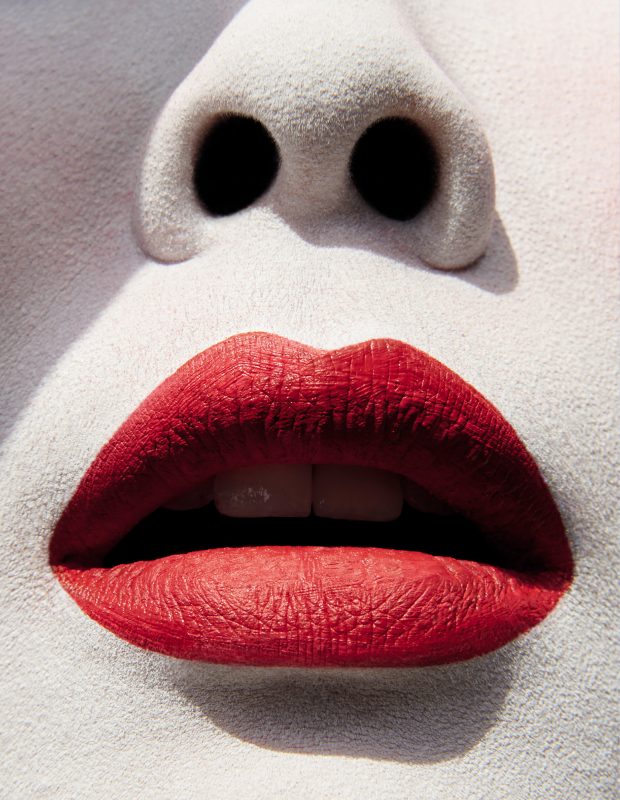
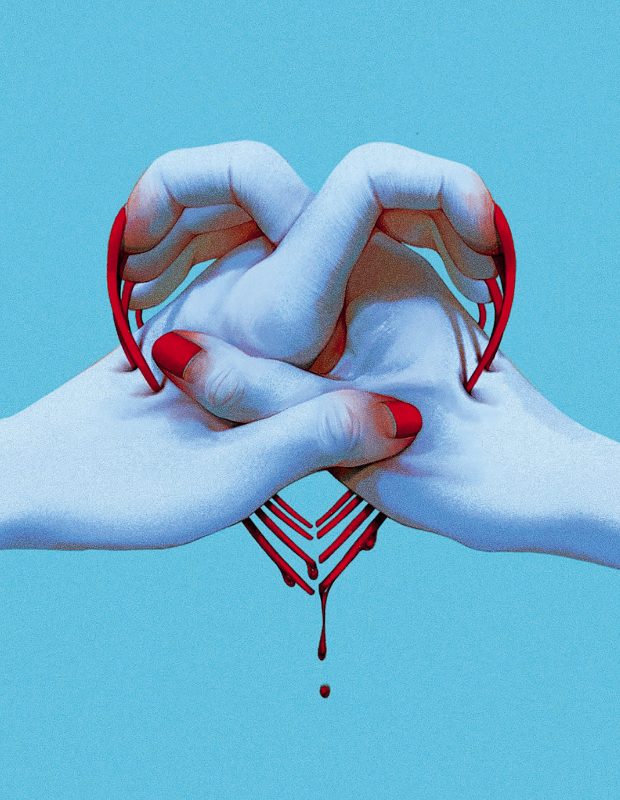
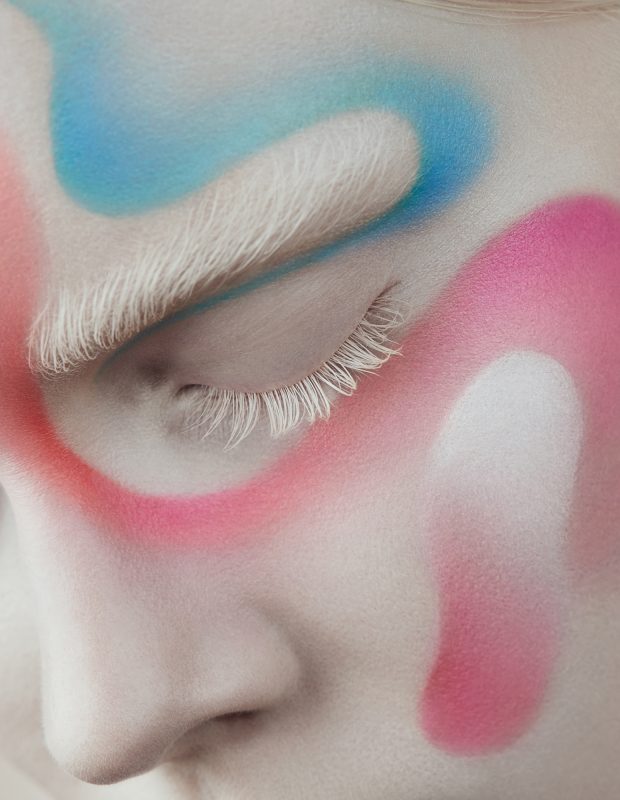
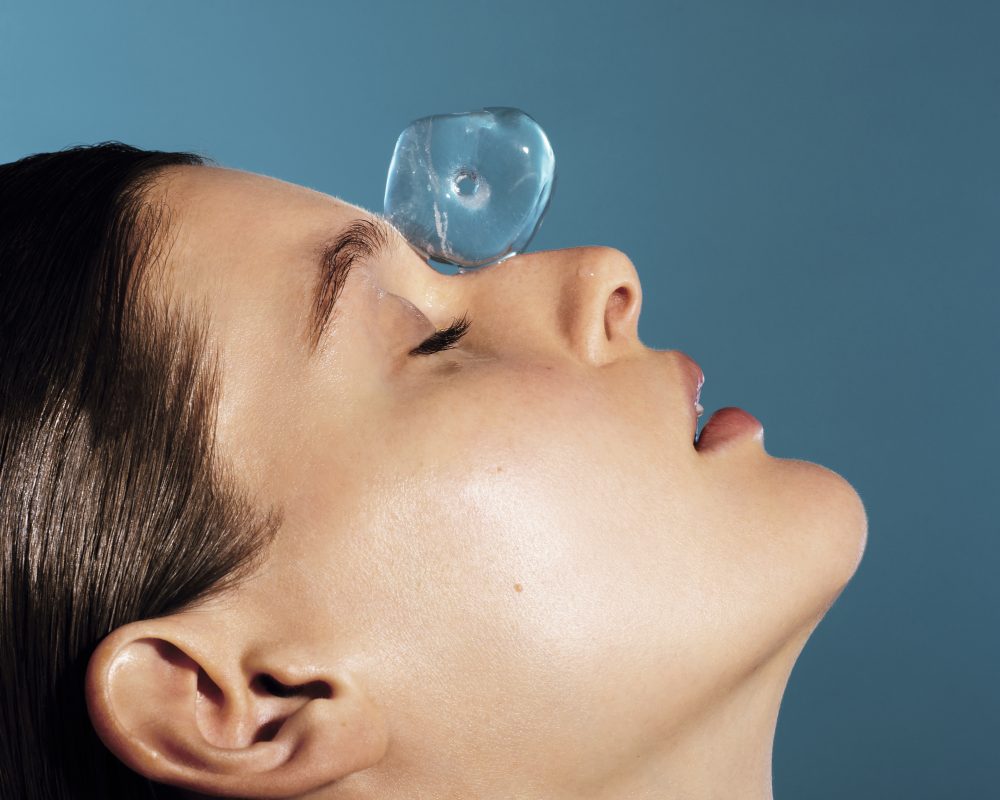
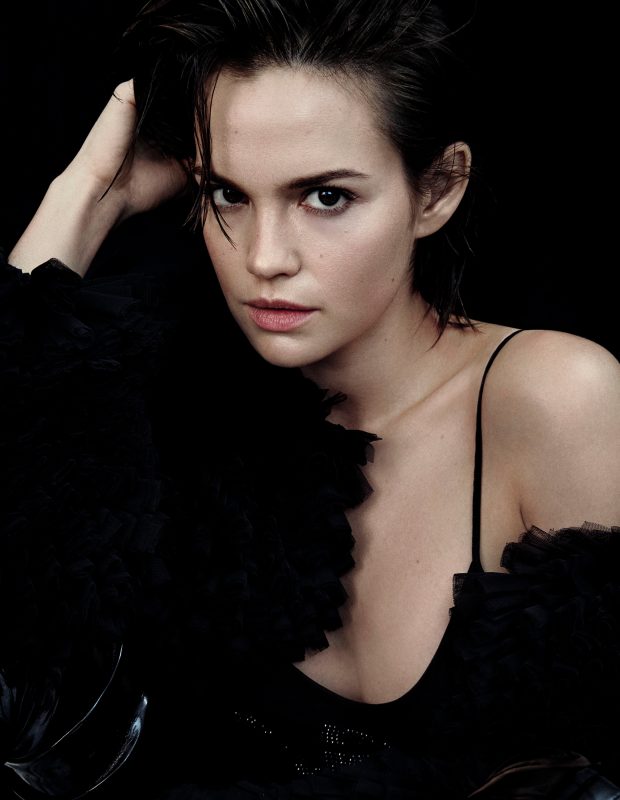
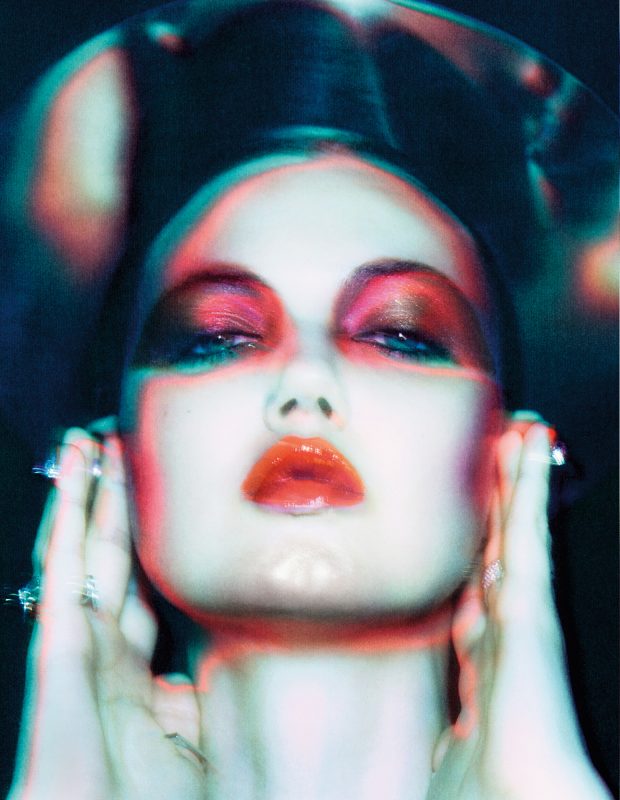
TUSH attended the premiere of the play, directed by Guy Weizman with text by Maria Milisavljević. Ahead of the performance, TUSH visited the theater’s ateliers for an intimate glimpse into the world of costume design, capturing the pieces in an exclusive photo shoot. There, we spoke with costume designers Joris Suk (MAISON the FAUX) and Simon Carle about their creative journey, their exploration of couture in the context of theater, and how their costumes breathe life into the play’s profound and delicate themes.
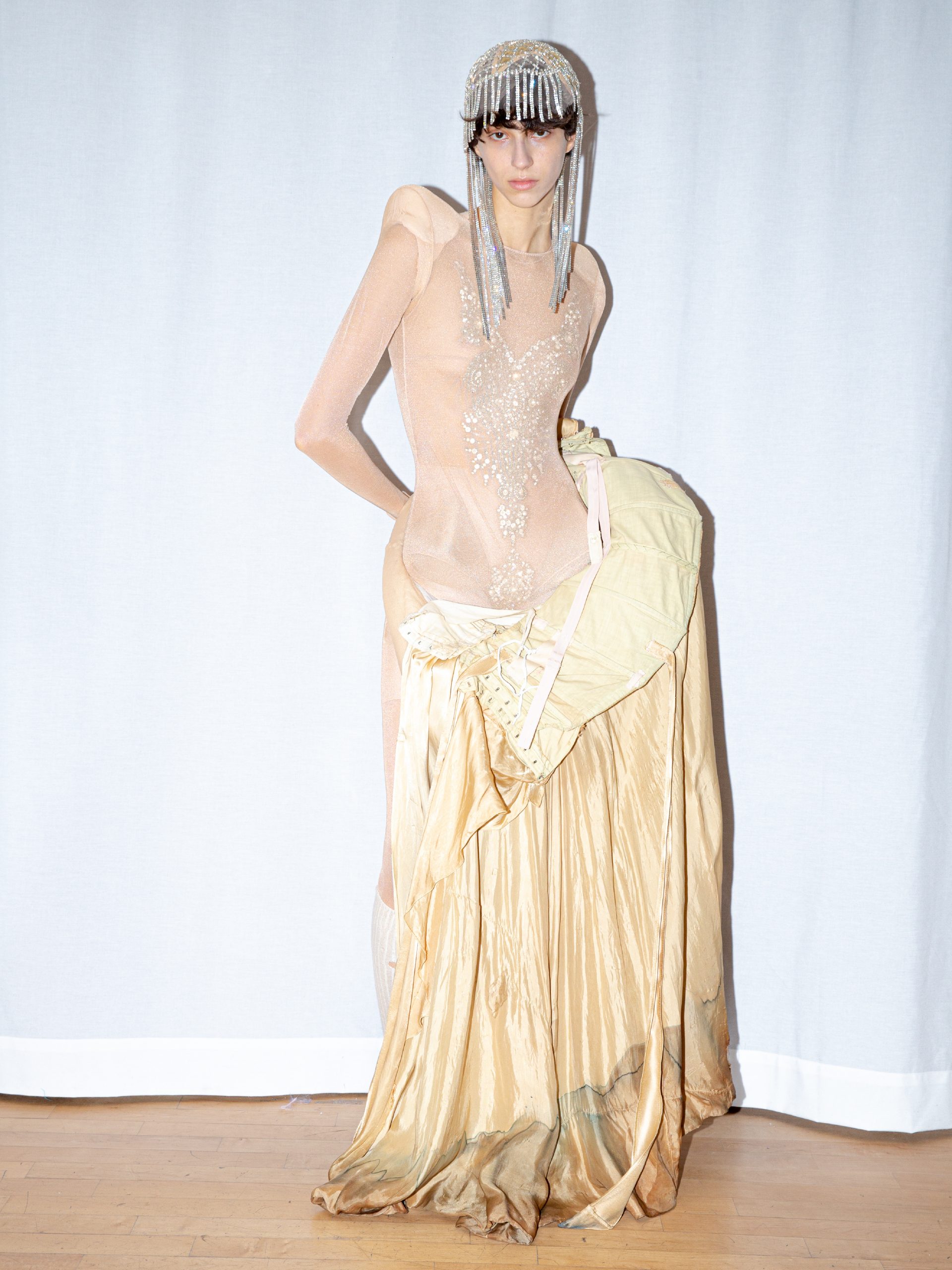
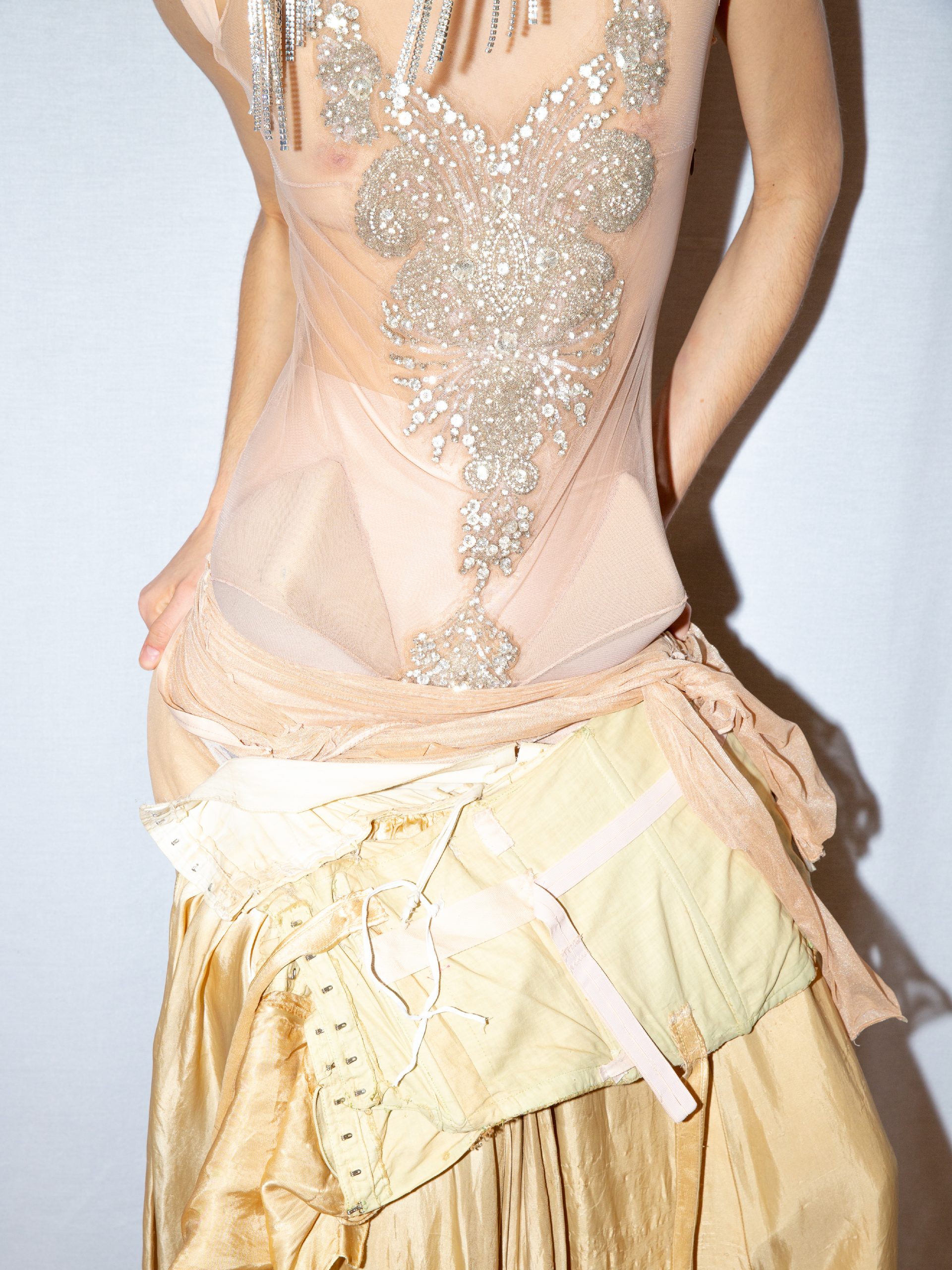
Photo: Ninu Dramis

TUSH: Within a play, costume design reflects not only the characters‘ personalities but also the broader themes of the piece. For “Hope”, how does your work reinforce or disrupt the characters?

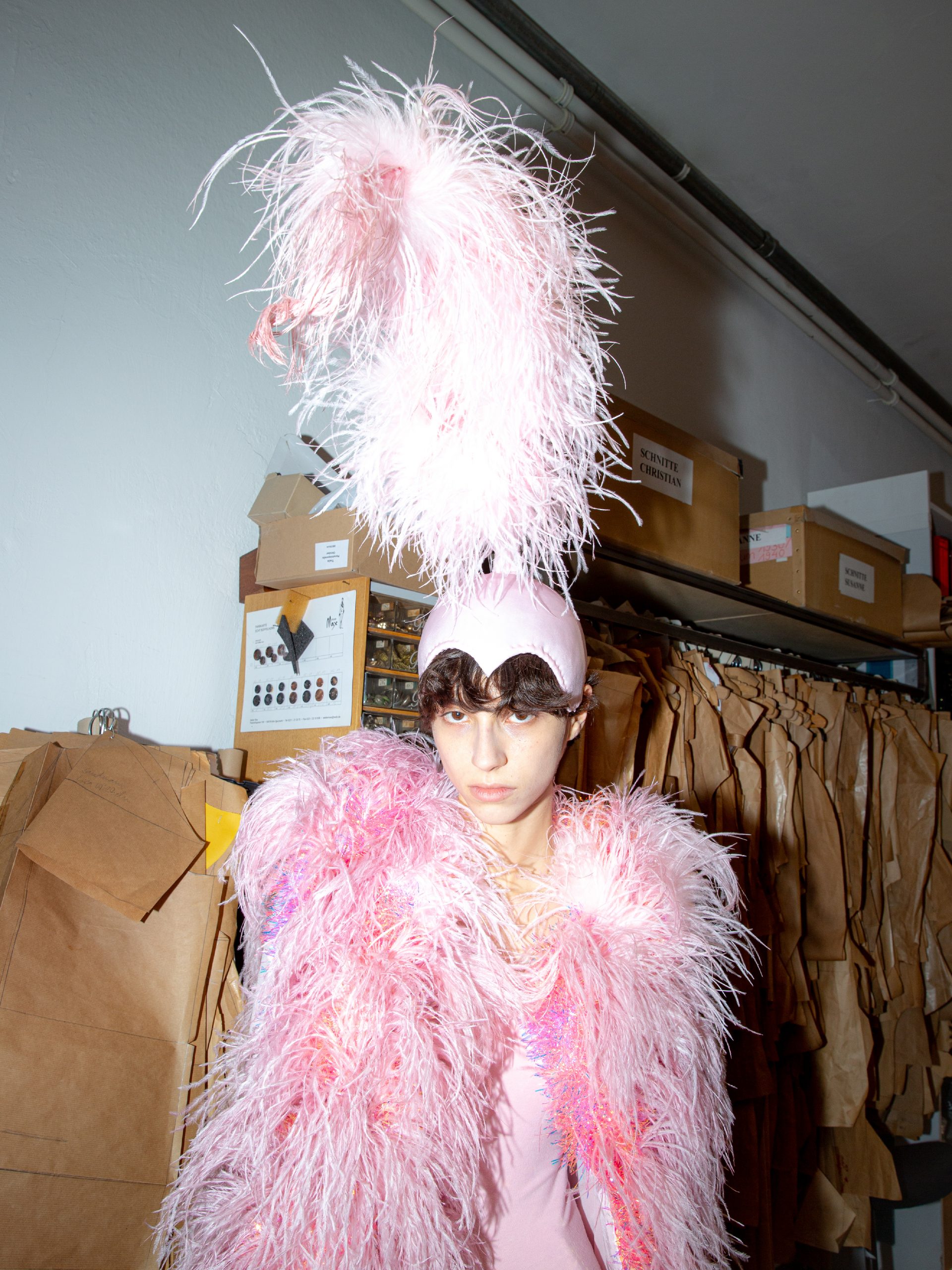
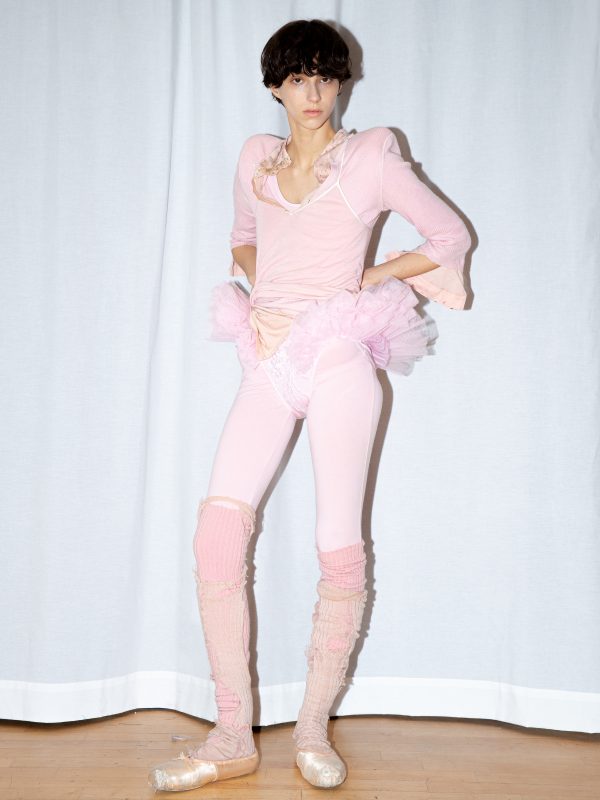
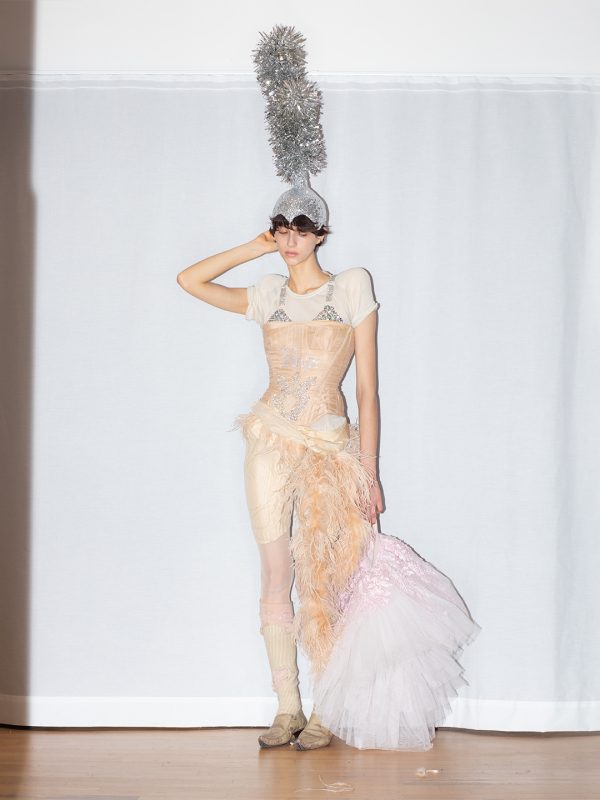
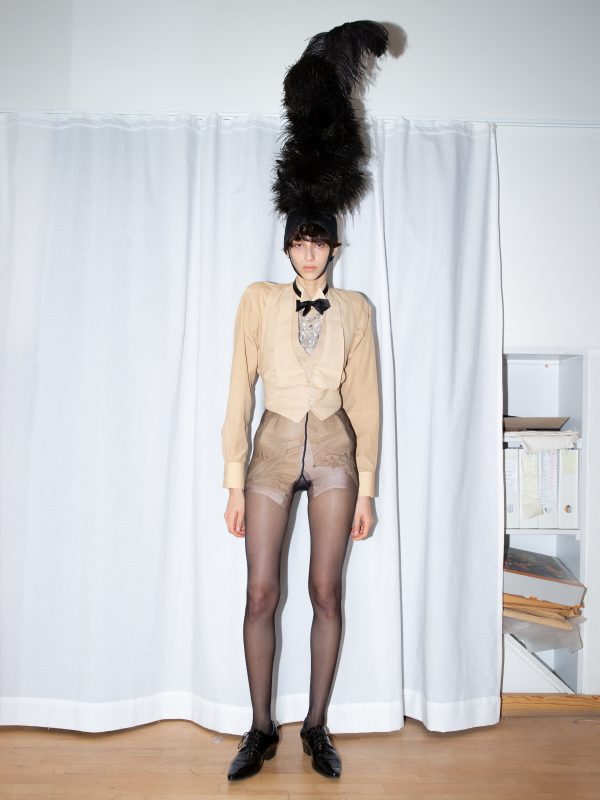
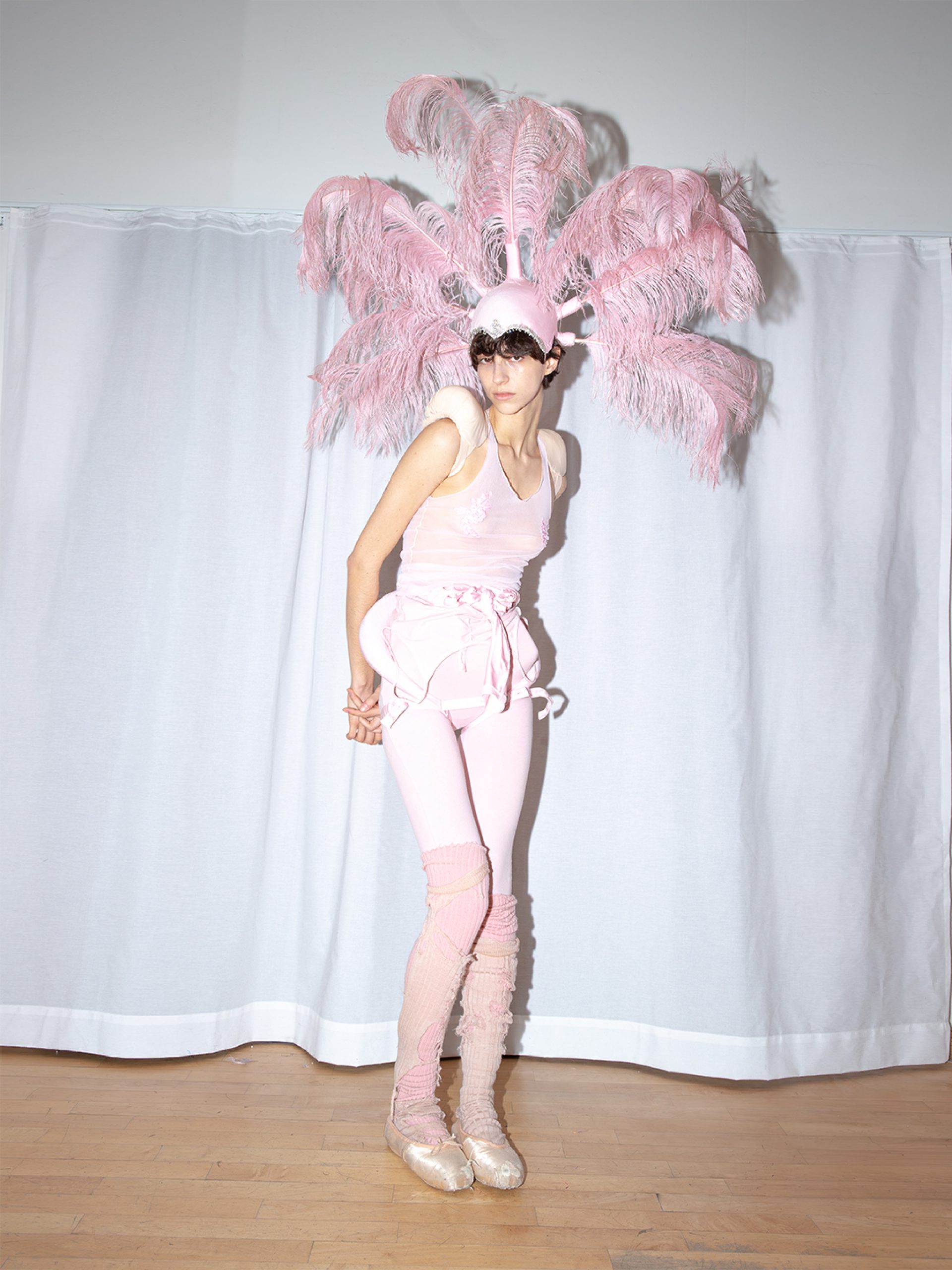
Joris Suk und Simon Carle: Within this production we tried to help the characters quite literally, but also on a meta level. The performance is based on a “dance company” preparing for a new performance. So to help this narrative we explored and deconstructed archetypal ballet references, and created a day (rehearsal) to night (stage) wardrobe for them that helped the performers in their characterisation. On a meta level we created all these feather headpieces that represent the bigger system that they are trapped in. But the feathers also refer to the quote of Emily Dickinson “Hope is the thing with feathers.”


TUSH: “Hope” explores whether hope can only blossom in challenging times. How did you approach embodying hope, the absence of it or maybe even doubt in hope through your costume design?

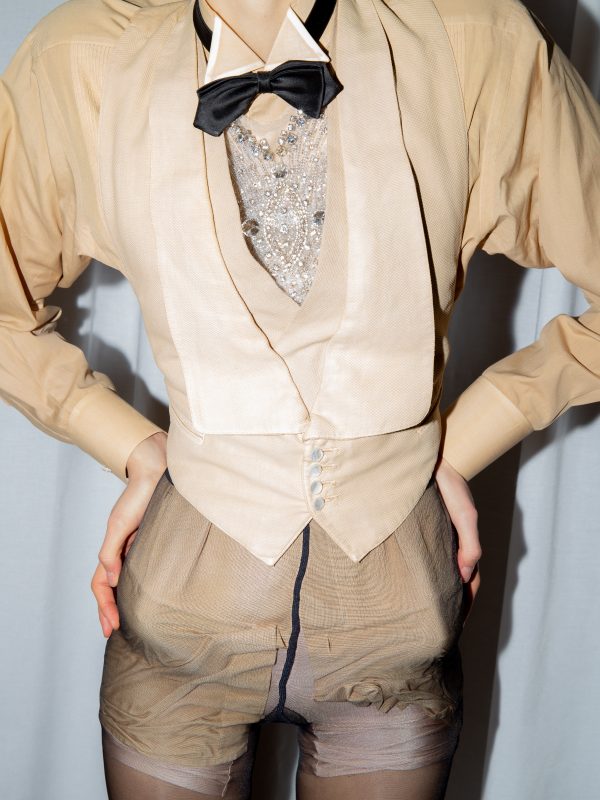
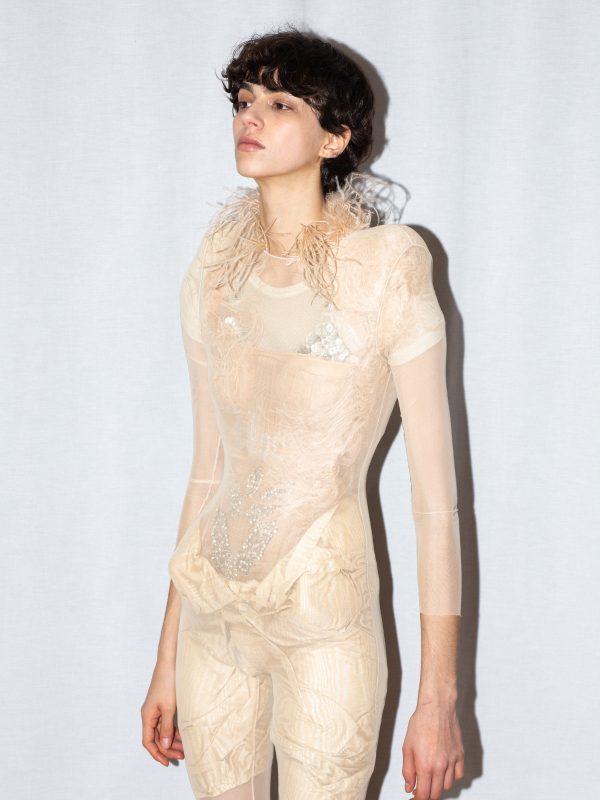
Joris Suk und Simon Carle: The delusion within the rhinestone, the pink, the feathers and exaggerated silhouettes embody the attempt of not losing or holding on to our faith in hope. Which becomes in our eyes a very beautiful, touching, silly and very human gesture toward the characters that are fighting and defending their beliefs.

The stupidity of facing the all disrupting and destroying flood in a pink tutu becomes very funny but also very touching and recognisable at the same time.

Photo: Ninu Dramis

TUSH: The play depicts society itself as a dystopia, with recurring battles for love, space, territory, power, and hope emerging as an ever-present form of resistance. With its poetic, trilingual resonance, in what way did you use fabrics, textures, colors, materials, and their weight to convey this layered complexity in the costume design?

Joris Suk und Simon Carle: We used the pink colour as a binding factor for the costumes and characters, within all the human disagreements we are more connected then we want to see sometimes (“We’re all made from flesh and bone” sort of thing). The huge amount of feathers give a symbolic reference to Hope itself. We also used a lot of Revue references, that in the 30’s and 40’s were places of resistance, where differences were celebrated and embraced.


TUSH: Your costume design for “Hope” is inspired by classical ballet, yet resists the polished perfection typical of classical ballet, it even has a streetwear vibe to it. Why was it important for you to show something more real and raw?

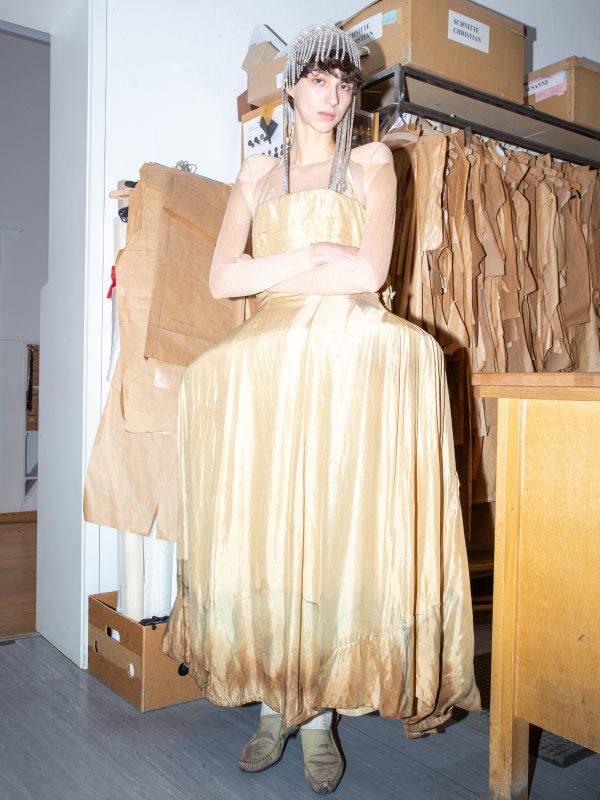
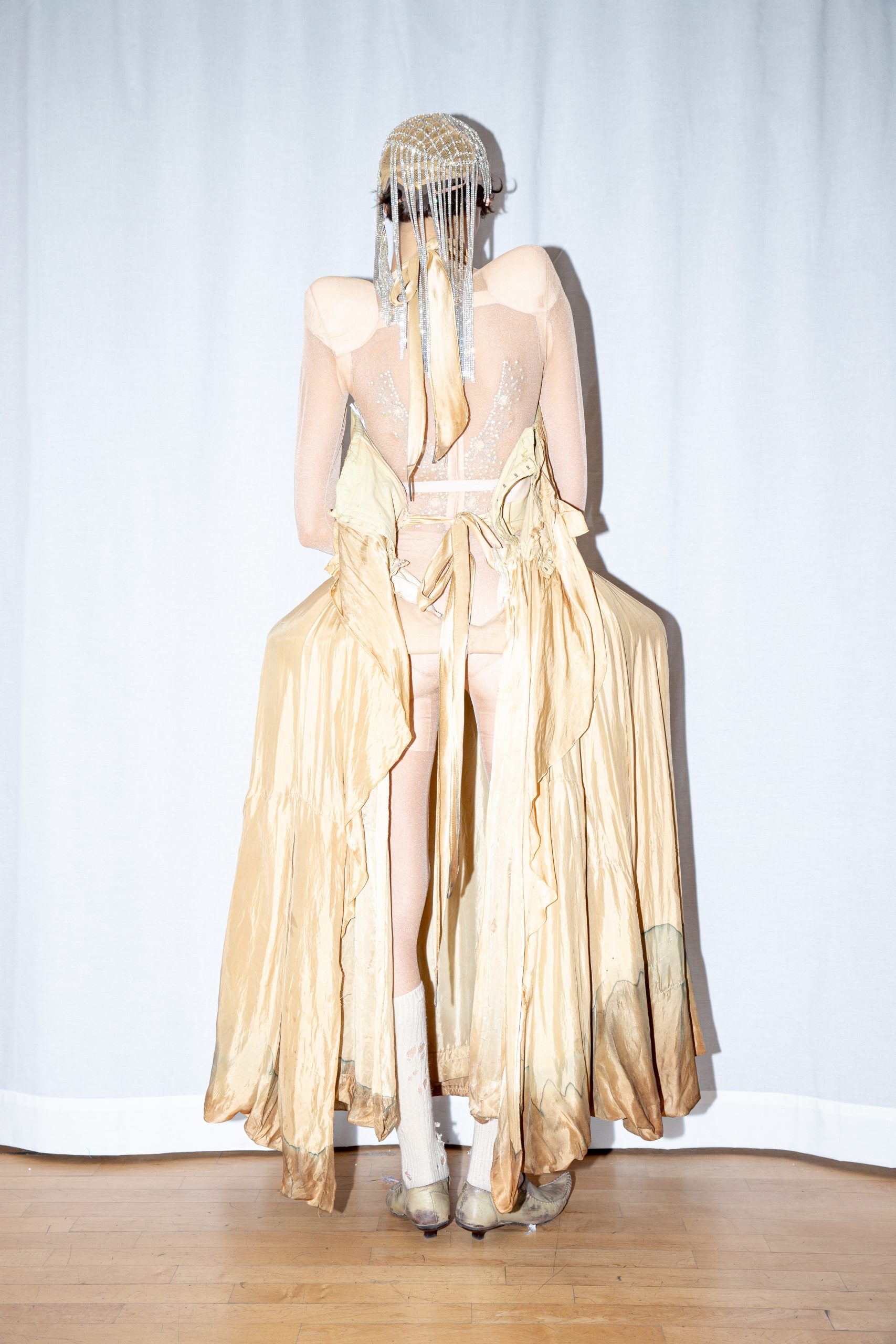
Joris Suk und Simon Carle: Within the fantastical language of ballet we felt the urgency to disrupt that perfection. To bring it back to some form of reality instead of leaving it floating in this unrealistic universe. The Clothes lived different lives before entering the stage, survived different floods already, and were still standing. Also the juxtaposition within these two languages was very exciting for us as designers.


Photo: Ninu Dramis
Photo: Ninu Dramis
Photo: Ninu Dramis
Photo: Ninu Dramis
Photo: Ninu Dramis
Photo: Ninu Dramis
Photo: Ninu Dramis
Photo: Ninu Dramis

"The amount of knowledge, craftsmanship and quality that’s hidden behind the doors of a theater is mindblowing"

TUSH: Simon, you work for fashion houses like Maison Margiela. Joris, you co-founded „Maison The Faux“, a “creative studio posing as a grand couture fashion house.” How did the two of you come to work together, and where do you begin when approaching a new project?

Joris Suk und Simon Carle: We’ve met some years ago in a class room in Arnhem. Where Joris was teaching and Simon started his design career as a student. The dialogue that started in that classroom never really stopped and we always stayed in touch. After years of admiring each other’s careers from a distance we found this possibility to collaborate. Within this collaboration we kept the conversation going and started to slowly formulate a design language that is based on two different voices but they find similarities in interests and the outcome.

It was a very fluid and natural process, which was also surprising for two people that never worked together. We’ve created space for each other’s strengths and we just had a lot of fun in making this together.


TUSH: Is costume design couture that has a day job?

Joris Suk und Simon Carle: There is some truth to that. What a lot of people don’t realise about the craft of costume design is the love and attention for detail goes into all their work. Which is not far from constructing a couture garment. The amount of knowledge, craftsmanship and quality that’s hidden behind the doors of a theater is mindblowing. As two designers with a love of craft and detail this was an absolute blessing. To work with all the amazing people of the atelier at thalia was a very beautiful experience for both of us.

Photo: Ninu Dramis

“HOPE”, the multilingual and interdisciplinary theater experience blending dance, music, and drama, is now showing at the Thalia Theater am Alstertor in Hamburg. Click here for performance dates and additional details.


INTERVIEW: Fabian Hart / Mavie Sellere
VISUAL EDITOR: Samir Duratović
PHOTO: Ninu Dramis
MODEL: Mariana Musante / Mirrrs Models

Anzeige

Archiv
Impressum / Imprint
Datenschutz / Privacy Policy
AGB / Terms of Use
Cookie Check