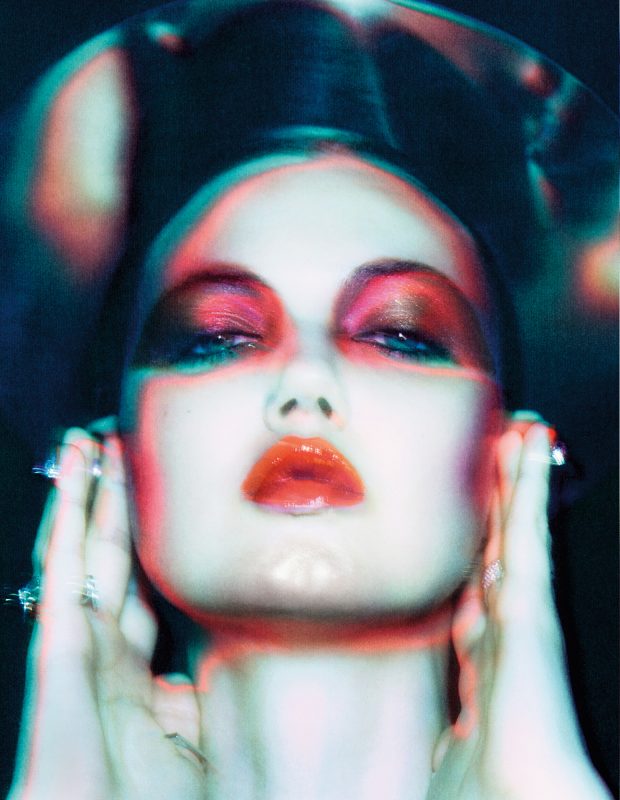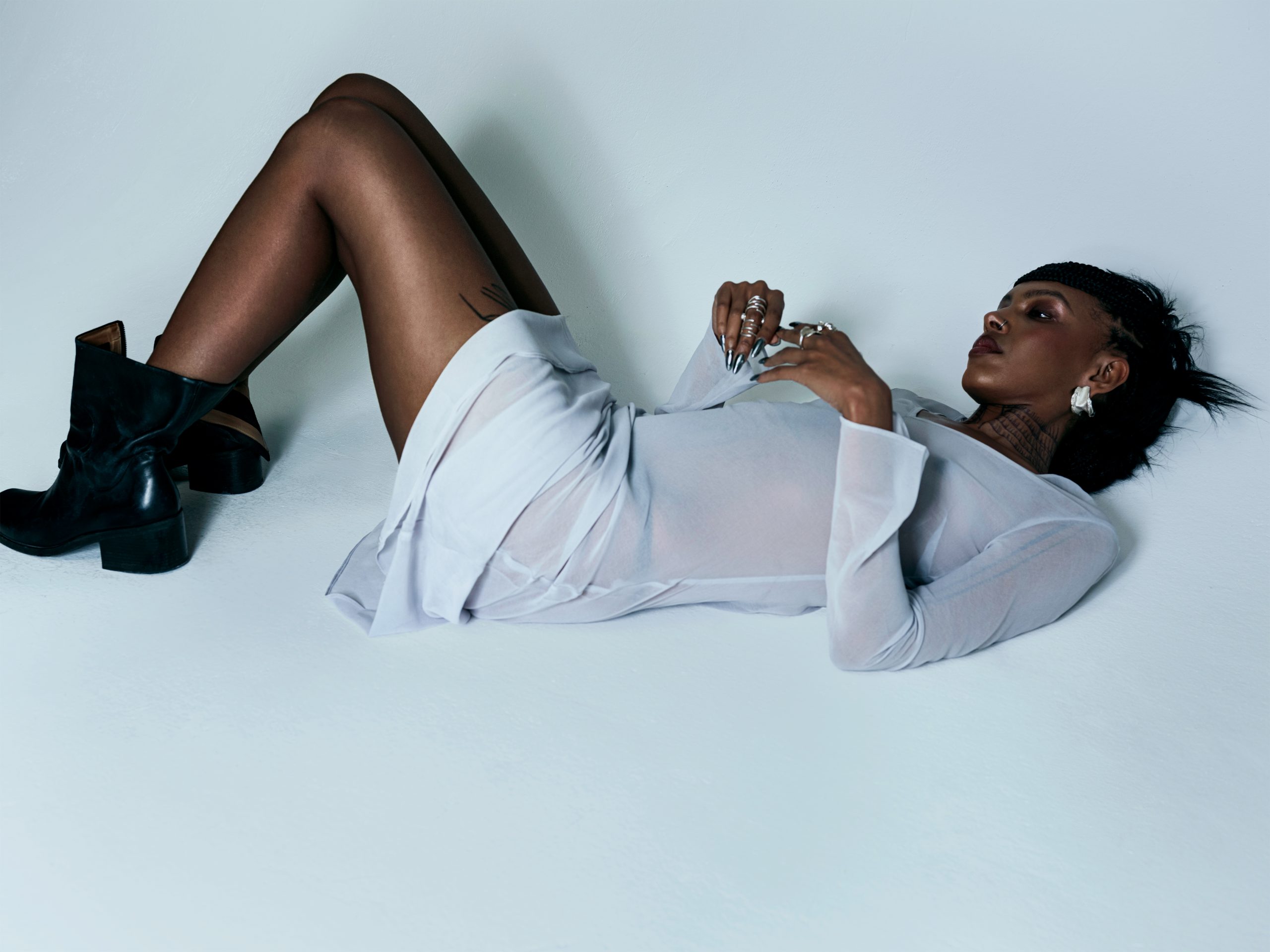
“I’m a Painter, who makes music!”

Alewya on her new album “ZERO”, feminine assertion and the freedom of not having to explain herself

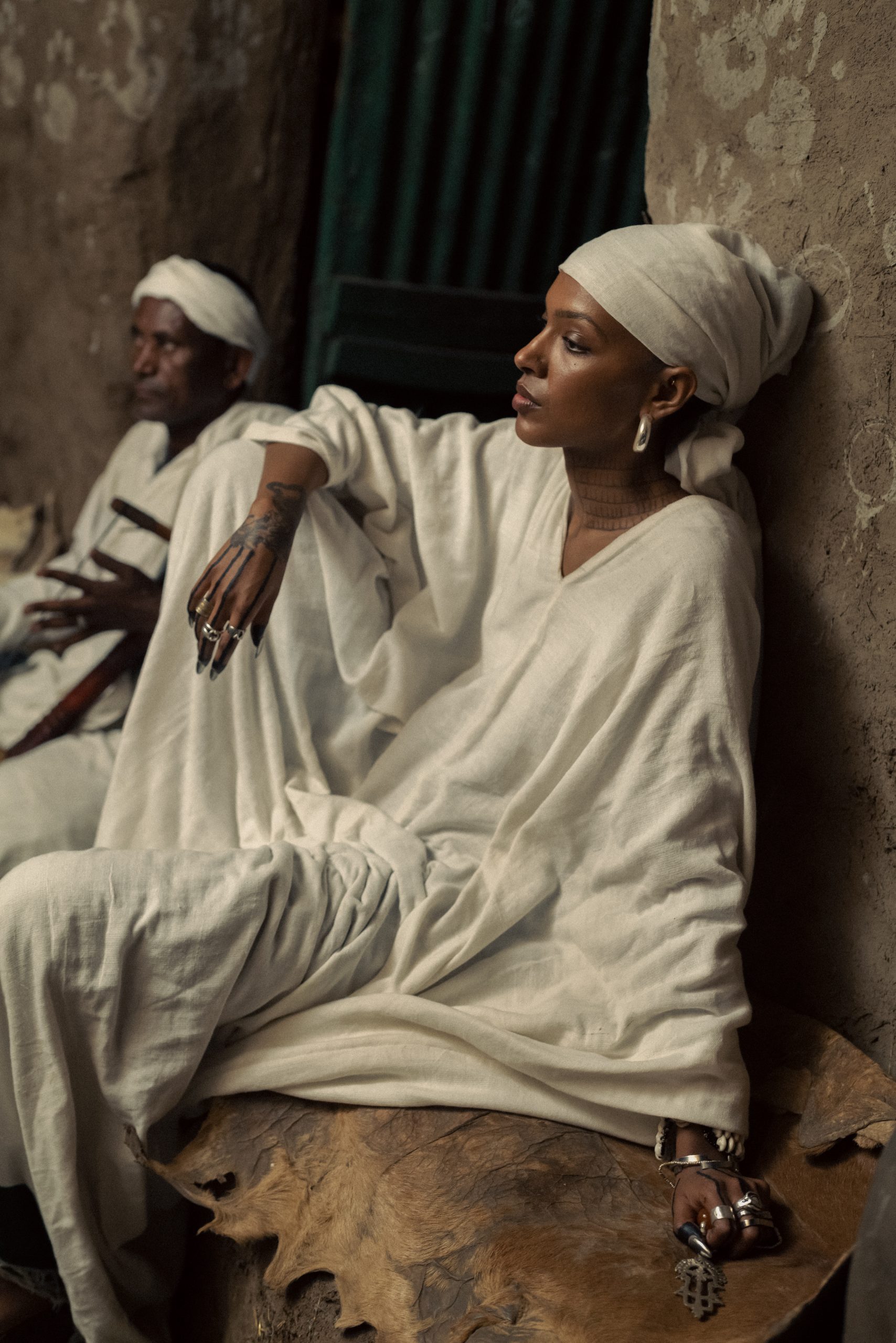
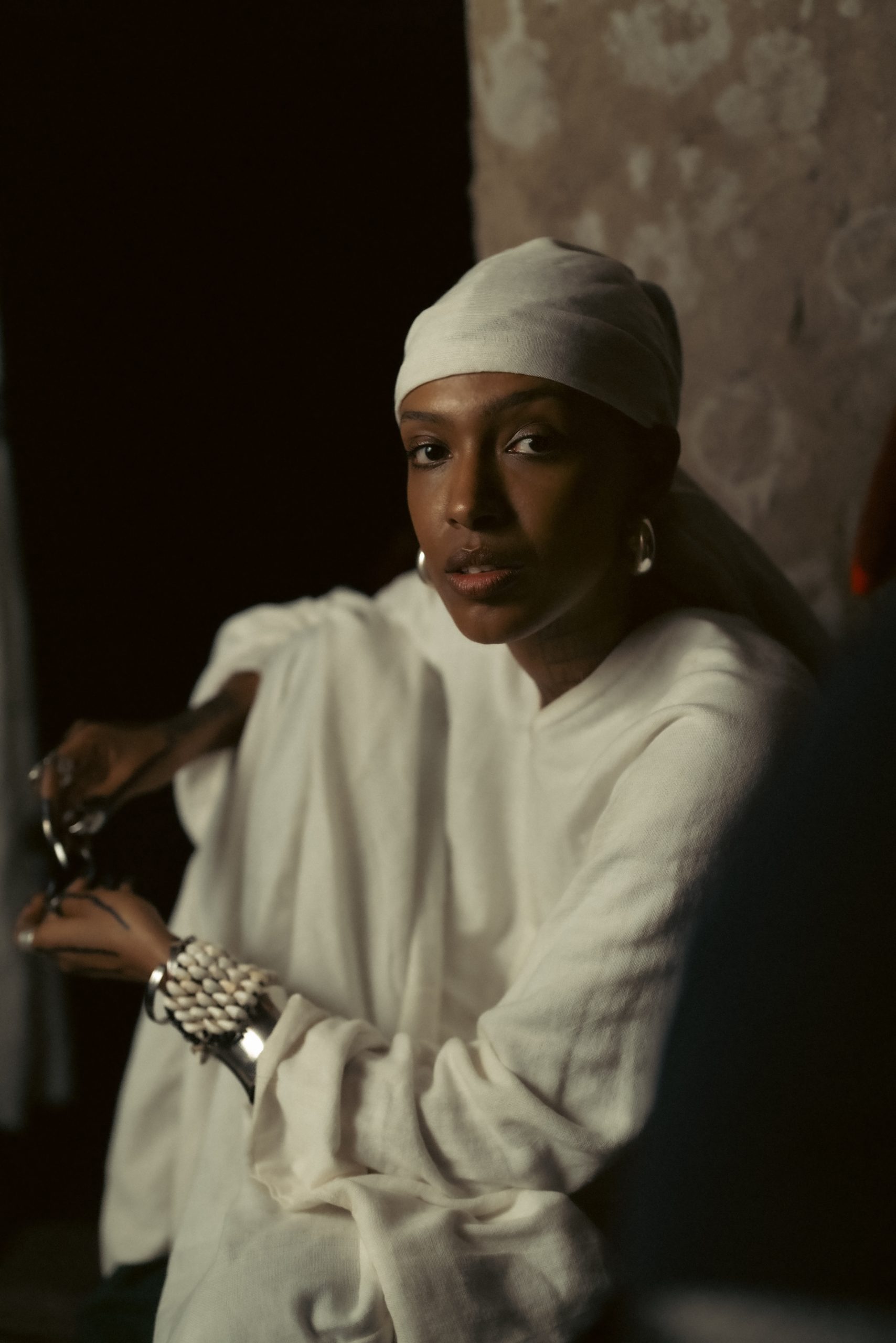
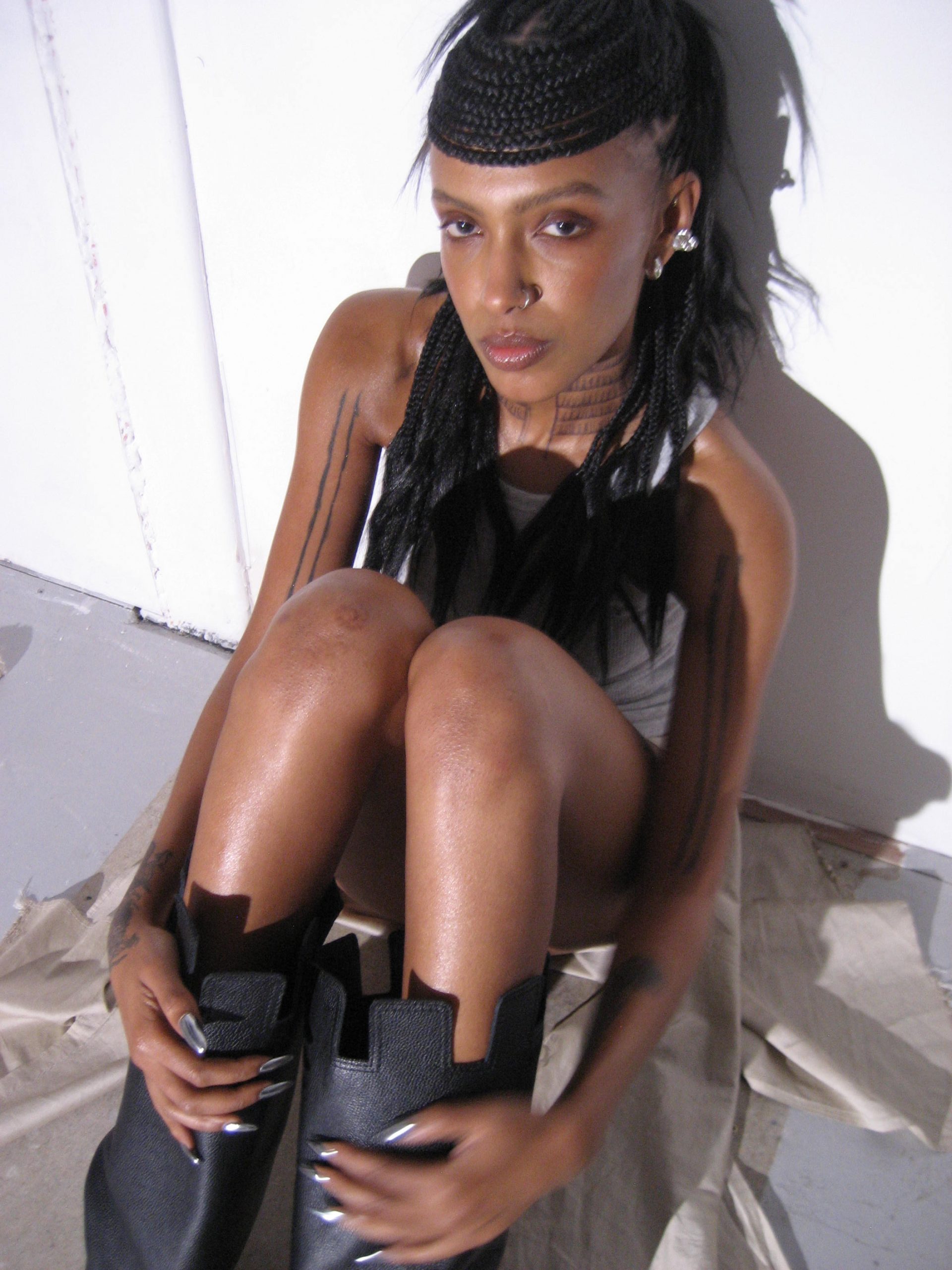
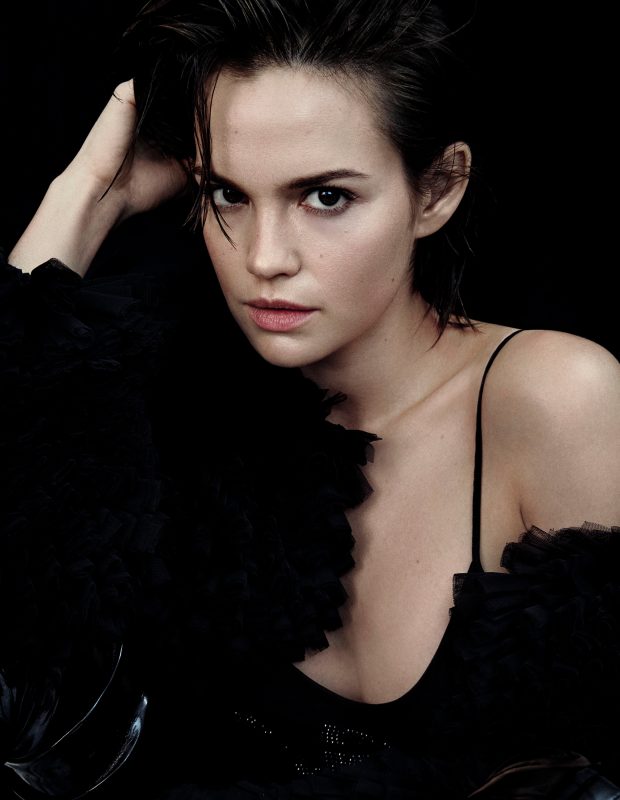
For Alewya, music does not begin with sound. It begins with movement, image and instinct. Born in Saudi Arabia and raised in West London, the 31-year-old Ethiopian-Egyptian artist grew up between Quranic recitations, Ethiopian rhythms and UK club culture. Before turning to sound, she began with graffiti and visual art, carrying that instinctive freedom into her musical practice.
Following her 2021 debut Panther in Mode, ZERO took four attempts to complete. Shaped by a process of shedding expectations, outside noise and the pressure to remain visible, the album draws on zero as both emptiness and infinite potential.
In conversation with TUSH editor Nosa Imafidon, Alewya speaks about feminine assertion, beauty beyond the surface and heritage as presence rather than performance.

TUSH: Your work feels deeply visual and physical, almost as if music, movement and image are all part of the same language. You describe yourself as “a painter who makes music.” How does that shape your creative process?
ALEWYA:  To me, it’s hard to distinguish those things from each other. It’s hard to explain something that is just instinct.
Most of my work is very instinctive. I try not to overthink why things need to happen, they just do. I need to be loose. My body needs to be involved. Everything about me needs to be inside the music for me to connect with it and for it to come alive.
I first started off as a painter, with graffiti and visual art. In that world, there is more acceptance of searching for possibilities. There isn’t the same rigidity around structure. Anything can make sense if it makes sense to you.
Coming from painting, where you can put anything wherever you want and mix any colours, I found music had more rules. Those rules can hinder the capturing of a feeling. When I apply myself as a painter to sound, that is how I get to the music.

What did you come to understand about yourself while creating ZERO, and what did “zero” come to mean to you?
That I understand nothing. And I came back to zero. That’s it. And then it repeats again and again.
I finished the album four times. Initially, I had to release whatever symptoms of success I felt I had from Panther in Mode. That success was unexpected, and I think it entered the studio. When I wanted to create music, I couldn’t. All I was left with were thoughts of criticism, judgement, expectations and ideas of where the sound had to move.
I knew that was foreign to my creative process and came from outside noise. I had to release everything I thought I was.
The music never stopped being there, but it required me to become what I needed to be in order to let it into my system. That is what ZERO was throughout the process. Life is music at the end of the day. There wasn’t really a separation.

The album is shaped by surrender. What did you have to release to let it become what it needed to be?
Noise, for sure. I had to detach from the need to be visible as an artist. I had to exist as who I was before and just live my life: see my friends, go to the studio, share food, make food, crack jokes, smoke, have a drink, travel. Just live as a human being who participates in the world.
It was simple, but it was the most effective thing: to place myself back in my life.

ZERO is built around five creative pillars: Roots, Deconstruction, Space, Feminine Assertion and Instinct. Which felt most personal to you?
They all do. I created that deck in Japan when I had to finish the album and dive into what the visual space would be. I analysed what stood out across production, vocal tone, intention, emotion, colours and where it was coming from.
The pillars can almost be seen in order. I needed rooting and grounding. Then I needed space. Then I needed to take everything apart, which is deconstruction. Then I needed to play, which is instinct.
Feminine Assertion was important because I work very closely with two men, and I love them deeply. But the woman needed to lead this. Leading in that way doesn’t mean being masculine in my approach. It means setting the space, taking time, being patient and allowing the music to come through.
The woman ends on ZERO. So the woman made ZERO. But she had to grow through those roots, space, deconstruction and instinct to break free.

For TUSH, beauty is deeply connected to identity and self-expression. What does beauty mean to you personally?
Beauty has changed for me over the years. I grew up within Ethiopian and Arabic culture, where beauty was very much one thing. Then, as a teenager, I went to school in South London, where the culture was predominantly Caribbean. I was very skinny, while other girls my age already had full bodies. That was the standard in that culture, so I thought I wasn’t beautiful.
When I became a model, beauty was really challenged. You are constantly questioned and judged on how beautiful you are. You also have to change yourself for each brand. You constantly adjust who you are to fit others.
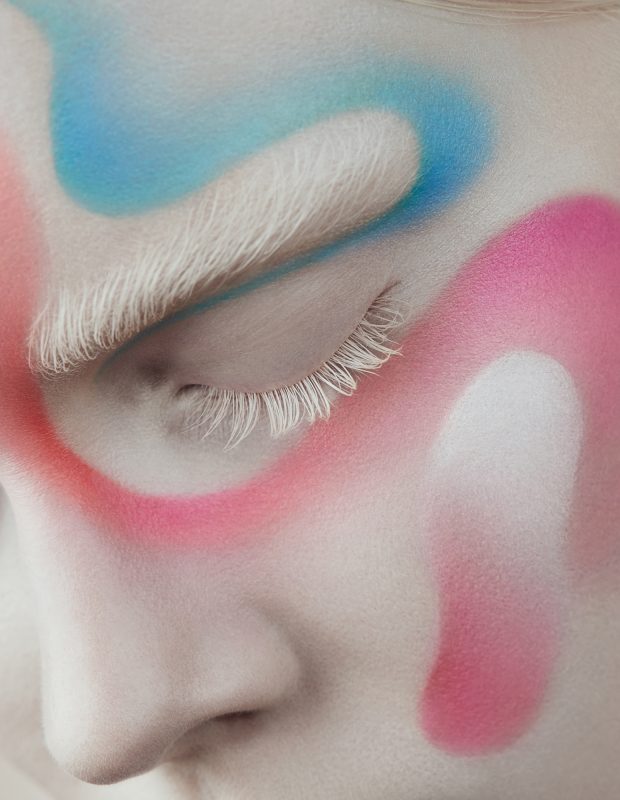
When I found art and music, and connected with people who loved film, photography, architecture, food and carpentry, I started to see beauty differently. It’s so much more interesting than the surface.
As I get older, that becomes more true. Beauty is about cleaning your heart in this life. You have to purify your essence because we get so tainted. You have to constantly clean your insides.
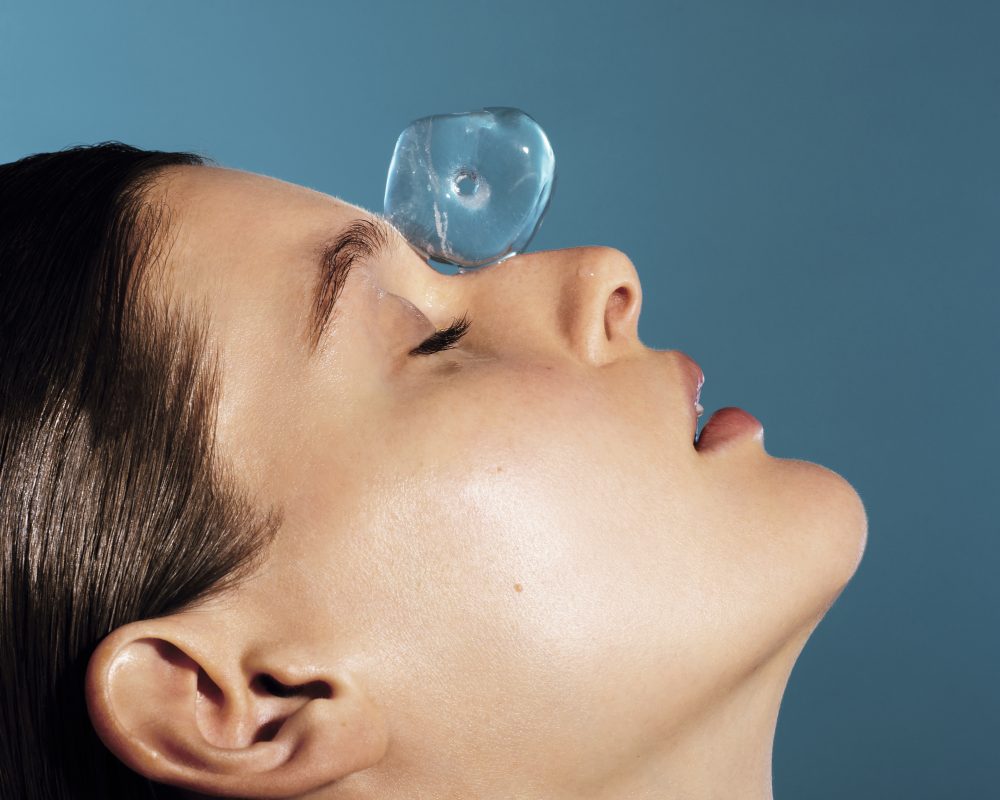
Now beauty is much more internal. But I also love certain rituals: doing my hair, taking baths, making my place smell good, candles, plants and flowers. All of that belongs to that world too, but it is really for the inside.

How does that understanding of beauty enter the visual world of your music?
With Panther in Mode, the mood was much more tense and charged. I was more in my masculine energy then. I’m quite an androgynous person and can flow between energies depending on the situation.
ZERO feels different. It softened and opened me. It allowed femininity to lead more. That is what has taken shape beauty-wise.
Maybe beauty is everything. Maybe it’s honesty to the situation. I’ve seen people in what would be considered their ugliest moments and understood those moments as honest. People close to me have seen me in my ugliest moments and still held me as beautiful, as long as it was honest.
As long as it’s true to the essence, there is beauty in that.

There is a line in your biography: “For Alewya, heritage is not performance but presence.” How do you protect your heritage from becoming something that needs to be explained or translated for others?
I just don’t explain my heritage. When I wrote the creative vision in Japan, I finished the presentation four times. By the fourth time, I realised that the more I tried to explain what it was, the more it fell away from me.
Especially if you come from an indigenous or native background, the roots of our cultures are not always logical. Parts of our way of being are rooted in essence, feeling and other ways of perceiving reality.
A lot doesn’t need to be said. It’s more important to live it and to be it. The way I protect it is by not feeding into performance. I just let it live inside me and continue being Alewya, who lives in London.
People sometimes think I’m very spiritual in the sense of meditating under a tree, but that isn’t really my way. I’m very grounded in human life. I just like to live, but my eyes are open.
The heritage lives within me, whether people know it or not.

Your performances feel intensely body-led. Do you see the body as an instrument in the same way as the voice?
One hundred percent. I need to move. I can’t keep still. Even on stage, it’s hard for me to just hold the microphone and sing because I need to find the rhythm.
I’m a physical person. I need to move energy through my body, through exercise, walking and massage. My body needs to feel connected.
But sometimes, when I’m on stage, I can’t even feel my body. It’s strange. It’s happening, but I’m not as attentive to it because I’m just in tune.

Are there any beauty rituals, scents or oils connected to your Ethiopian or Egyptian heritage that remain part of your life today?
Yes. I burn frankincense in my house nearly every day. From the Egyptian side, we have bakhoor, which is the Arabic version of burning resin. Bakhoor can be made up of many different types of resins.
One I really love right now is amber from Yemen. My friend brought it to me, and it smells beautiful, like natural perfume in a good way.
When I go to Ethiopia, I come back like an auntie. Last time, I came back with honey, fresh flaxseed oil, castor oil, lots of herbs, moringa, hibiscus and turmeric. I bring everything back to London.
I use it for my hair and my skin. I also take flaxseed oil and black seed oil. Those things are always with me.

[Interview]
NOSA IMAFIDON
Juni 26, 2026
Archiv
Impressum / Imprint
Datenschutz / Privacy Policy
AGB / Terms of Use
Cookie Check