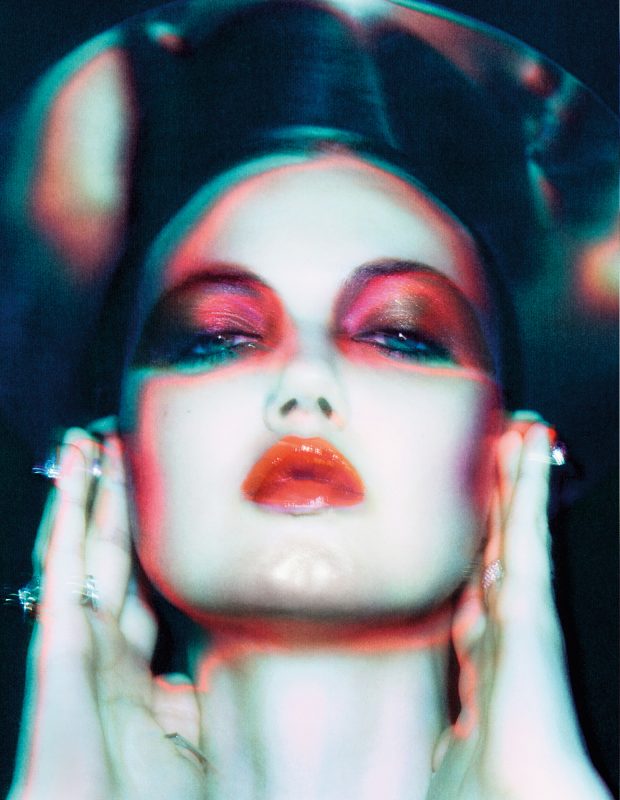
“I FEEL LIKE BEAUTY TELLS THE STORY, NOT JUST TO ANYONE LOOKING AT YOU, BUT TO YOURSELF.”

With her new studio album Swallow!, Shygirl explores love on her own terms

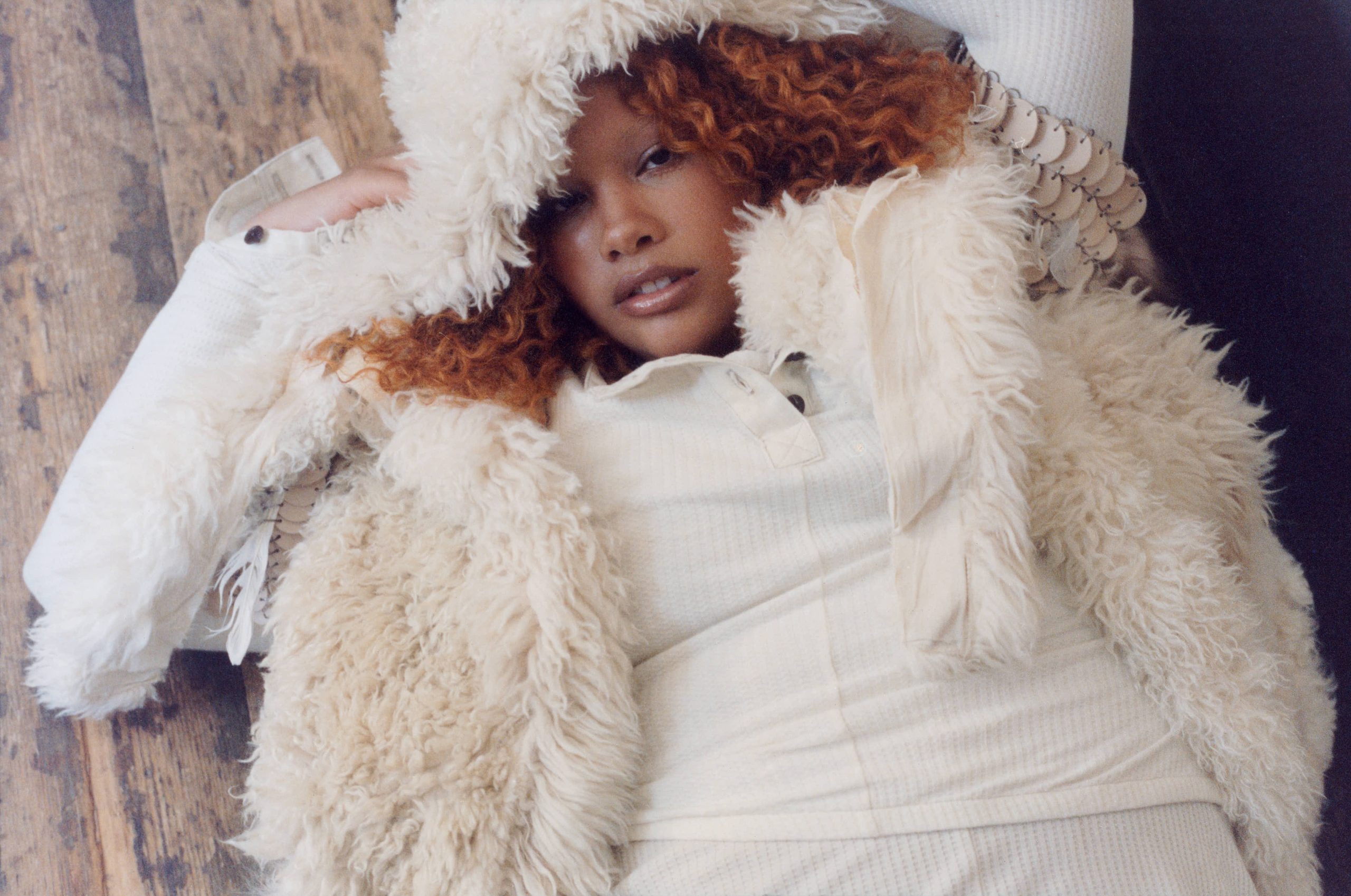
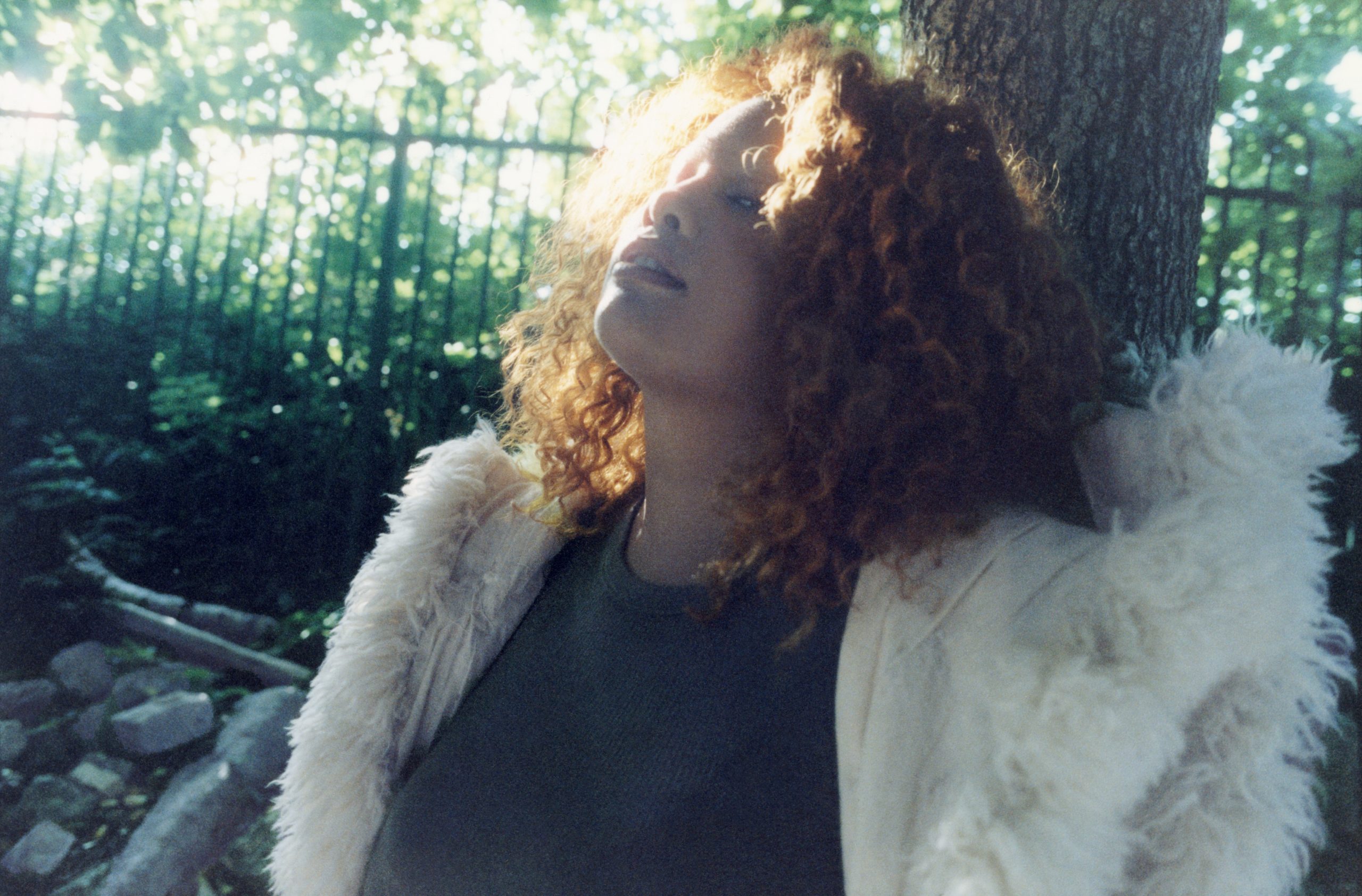
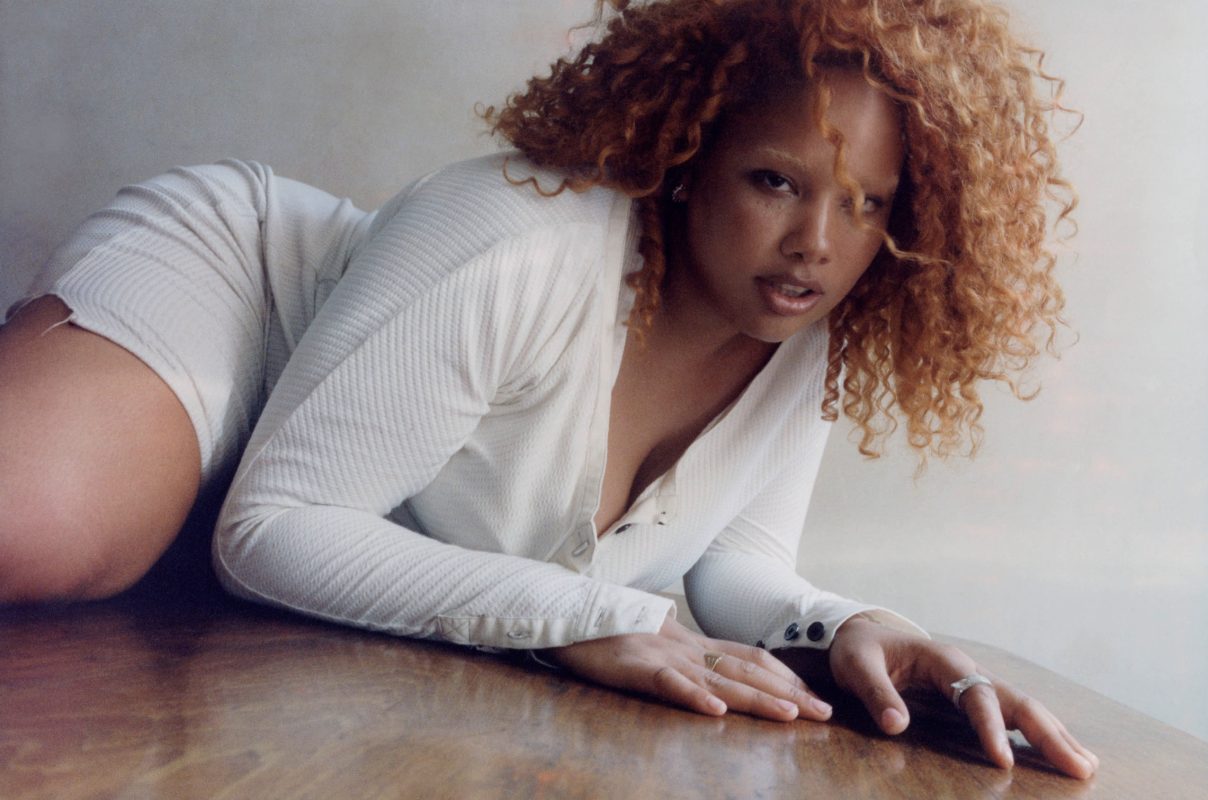
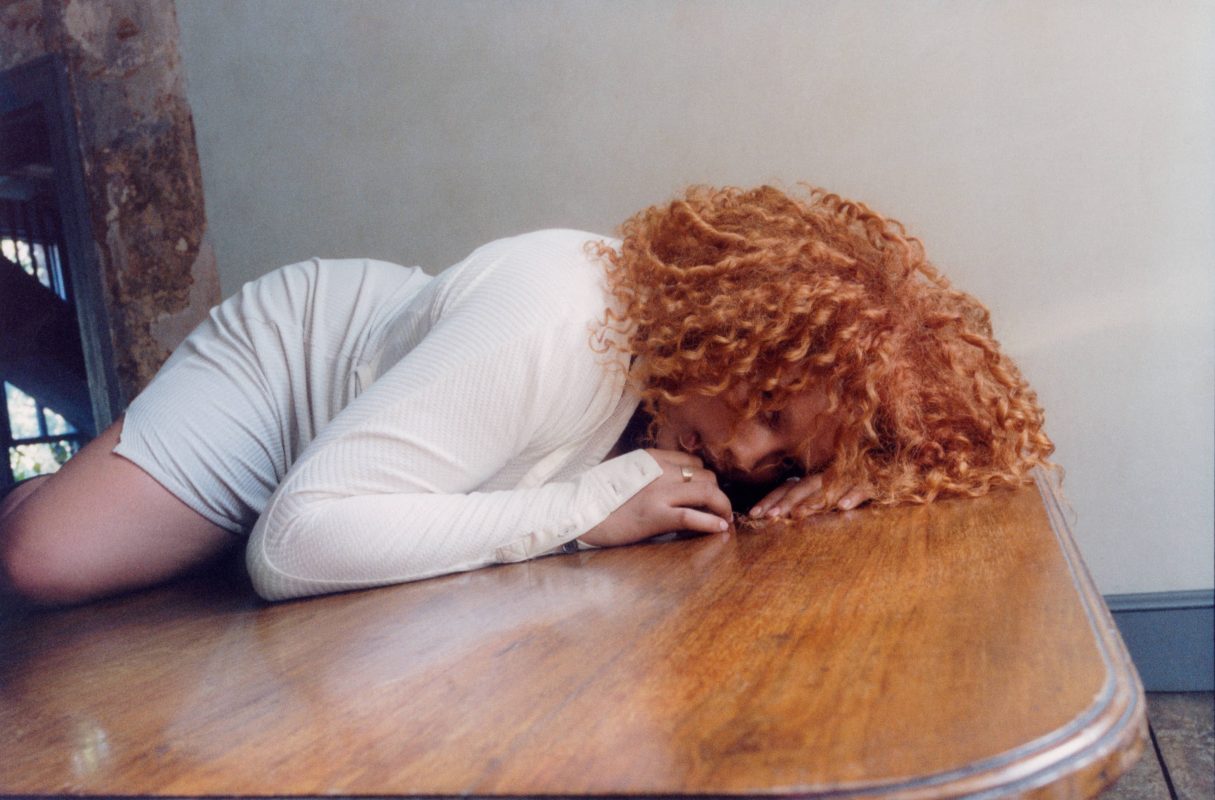
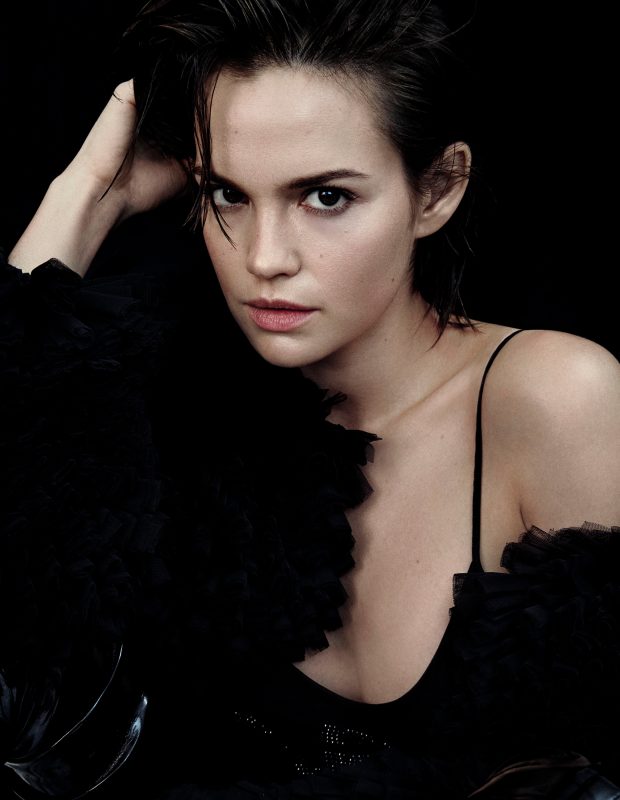
Shygirl is no longer interested in hiding behind her stage persona. Her signature look has changed: the wigs are gone, and the makeup is minimal. With this stripped-back approach, the 33-year-old British musician, born Blane Muise, reflects a shift in how she wants to be seen, both on and off stage.

Known for her provocative blend of electronic music and underground club culture, Shygirl shares a different vibe with her second studio album Swallow!, out November 6. Three years in the making, the record draws on her experiences of falling in love and finding a relationship in which she feels fully seen. For the first time, she is also bringing her music to the stage with a live band, trading the familiarity of playback for the spontaneity of live instrumentation.

Speaking to TUSH editor Nosa Imafidon, Shygirl explains why she no longer feels the need to separate her public and private selves, how hair and makeup help her tell stories without words, and why showing her natural skin, imperfections included, has become a source of liberation.

TUSH: You’ve described Swallow! as a reintroduction to yourself. Is there a version of you that you feel people are still holding on to?

Shygirl: The way I approach reintroduction would be similarly to when you haven’t seen a friend for a long while and some things have happened in between. It’s still the person that you knew, but there are things that you’ve missed out on and they have changed slightly. That’s kind of how I imagined this.

For me, I’m not getting rid of the person that needed to be there to be the person I am today. There have been some life-changing things that have happened to me. Even the act of sharing my last record was life-changing. That experience changed my perspective on what this career can offer me and the kind of moments that I can exist within.

Performing from 2021 to now has really changed what I want from music. Sometimes I want more than the club can offer. I want to be able to be on huge stages and see like-minded individuals fill up rooms like that, and to create spaces where people like me feel seen. The best way to do that for me is to explore new ways to sing and to experiment sonically.

TUSH: You’ve explored desire throughout your music. Is wanting to be loved better for writing music than actually being in love?

Shygirl: I find both things inspiring. Ultimately, the pursuit of my desire is something that I always find something to write about. The thing I always feel less inspired by, and have often felt blocked by, is when I don’t know what to do. When I’m at a crossroad and the options are not clear to me.

As soon as I figure out where I’m heading, it’s way easier to write the map with my words, to be able to create the path. I need to know the destination.

Being in love, for me, is a landscape I want to exist within. I wanted to paint the picture of that space and document it so that I would be able to revisit it. This album acts like a portal for me to revisit every emotion I felt over these last three years. And so do the last records.

The times when I felt angsty or frustrated, those songs were tools to get out of those frustrations. I was repurposing situations and reimagining the outcomes in order to make those outcomes real. Whereas with this record, I had the power. I had found a space because of all the music before, and found a partner who could meet me just as equally and see me just as I wanted to be seen.

TUSH: I love the idea of the album becoming a way to revisit those emotions. And because Swallow! feels so personal, I wonder how you navigate that vulnerability. How do you decide which parts of your life you’re comfortable sharing through your music and which you’d rather keep to yourself?

Shygirl: I kind of push myself to share everything because it feels uncomfortable. I think that’s when I know something is worth interrogating. Anything that feels scary or challenging, I would probably push to confront that feeling because, in my experience, it’s always been to my benefit afterwards.

To be able to stand up and be proud of what I went through, what I’m experiencing, in order for someone else to relate to, it’s such a worthwhile thing to do. It’s the only thing I can think of that would give my life some meaning, to be able to share that very human experience.

For me, life is not about building the biggest structure or completing the fastest race or being the best at one. It’s about showing people what it means to be human and that it’s fine if you fail, it’s fine if you stumble. It’s about showing up and how you exist every day.

Something that stuck with me from a very early age: my parents said to me, „Just while you’re existing, you affect something.“ And for me, that has relieved so much pressure. Because I know that my existence inadvertently affects something. And when I do try and do something like make a song that would potentially affect someone, I know that intensifies that action tenfold.

It’s nice to be able to connect to people, even in these interviews.

TUSH: There’s something really beautiful about that perspective, especially the idea that simply existing can have an impact. It also reminds me of „Mantra“ and the power of telling yourself something you might not necessarily feel in that moment. What do you need to hear these days?

Shygirl: It’s so funny because „Mantra“, for me, becomes something that you feel like you have to say and believe. Sometimes you have to allow it to manifest, but sometimes it just becomes something that you embody in your actions.

And I think that’s a lot of the pairings throughout this record. It’s about matching your words with your actions. Even the title of the album is an action. It’s about moving forward.

So my mantra is getting up and doing the things that I can accomplish, and actually making them real rather than just having them as theories or plans that are written down. That’s something that I manifest physically every day.

TUSH: That idea of turning thoughts into actions seems to extend beyond your music, too. Club culture has always been such an important part of your world. Has becoming more recognisable changed how free you feel on the dancefloor?

Shygirl: I definitely did feel the anonymity that I had before in the spaces I would enjoy the most was reduced. It became a different type of environment for me.

Instead of lamenting the things that had changed and, at the time, I thought I had lost, I would embrace the things that I had gained. For me, the gain was access to be able to create space, not just enter it, and to be able to host and put people into that space that enjoyed the music and that company.

The nights really informed the making of this album because I was experimenting with the demos in that space. I was DJing, I was using it as a laboratory and getting immediate crowd feedback on certain songs like „Alyse“, without them feeling like it was to do with me as a person or me as a band. It was about the automatic response to the sonics. It was such a helpful tool to be able to adjust what I wanted from this music.

I love that the club is so vast. I love the kind of campiness of commercial clubbing. I think it’s so fun because of its kind of pastiche. And then you have the underground and the free parties.

Even in the music industry, you have the commercial parts of it and then you have the underground, and you can’t have one without the other. They feed into each other. We need money to be able to put on parties, but you also need creativity from the underground to be able to have things to sell.

What you make in the club is an artefact of the crowd that comes within it. A lot of it is up to the people.

TUSH: You’ve always been interested in how music can create a shared experience. Now you’re bringing that energy into a different live setting, performing Swallow! with a full band. What do you hope people will experience at these shows that they might not get from listening to the album at home?

Shygirl: For me, it’s the spontaneity. As much as we rehearse, which we have been doing, living in the present of performing has so much going on. Having musicians transform the music on stage is always an element that elevates the music.

I love going to the theatre and seeing that they have a full orchestra. Before now, I’ve always played shows with playback. Transforming it from a very electronic space has been difficult, and I never wanted to change the music too much.

But with this album, there is a punk energy underneath for me. And that has been a very inspiring way to figure out how to transform this music on stage. What makes me feel like I can respond and be present and decide what I want to do in that moment?

Having the live instrumentation and the band, and not just being the only person on stage, but it still being really about the music rather than having 20 dancers or whatever. This is about the music moving me.

TUSH: And does performing with a band change the way you connect with your own songs?

Shygirl: Yeah, for sure. It was something I always dreamed of. When I made „Freak“, for instance, I always thought I had this kind of garage-band energy running through it, and I’d always yearned to hear it in this way.

My experience with live instrumentation was very minimal. I always like to have some understanding and some knowledge to direct. I like to have some practical understanding, and I just didn’t have the experience in order to direct.

I’m so glad that now I do, and I understand what I want from these songs on stage. Finding the right people to be able to translate my ideas has been such a long process.

I spent three years working on this album, and then I spent one year developing the live show. So there’s a lot that goes on before we even get to the stage.

Part of my development of this live show is leaving space to be able to develop it as it goes as well. I want to be able to learn from the experience of playing. That, for me, keeps me excited by the shows because each show will be informed by the audience.

I know I have an audience who believes in me. I’ve been playing so many festivals and opening slots. To be able to come back to headline shows where you’re playing to people who have supported you for ages, and also new ones, you can’t not want to put on a good show. I think that is a tangible energy that feeds into the performance.

TUSH: Your music videos often feel like short films, with characters who have their own personalities and stories. How do hair and makeup help bring those characters to life?

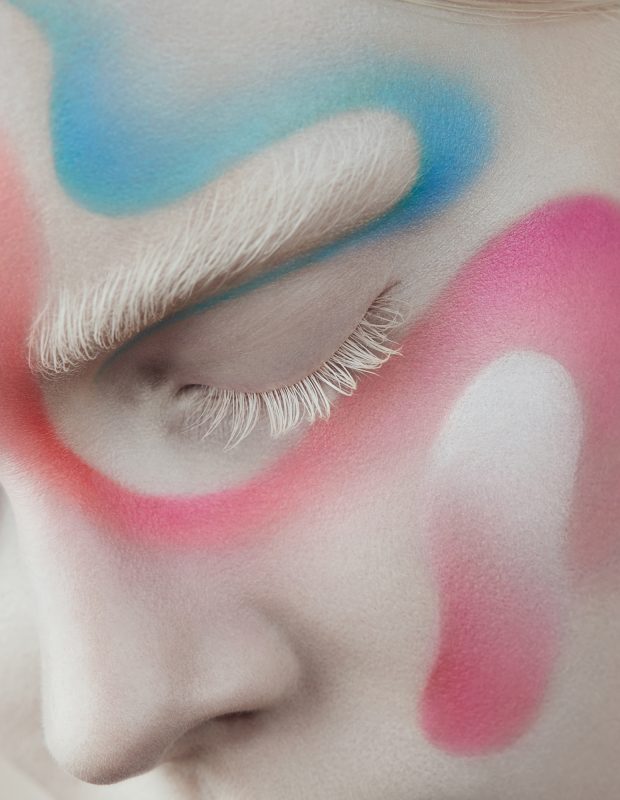
Shygirl: I think it’s important because it’s nice for me not to have to appear to be a perfect character. There has to be some element of a lived-in experience. Ultimately, it’s easier for me to access myself through that character and what the reality is like.

You imagine the character has lived in that look for 24 hours, so it can’t be fresh. It’s freeing to be able to decide.

The character I’m playing in that video is the personification of Alyse, and she is someone who doesn’t take much time on her makeup. She needs things that still feel feminine, but that are quick to do. There’s an imperfection there because it needed to feel like someone who was in a rush.

The way my hair is in that character is lived-in. Her friend Vega is someone who does take more time, but in a way that feels effortless to her. You know that her lips are always well-defined and her hair is always smooth, no matter how many hours she’s spent partying.

Those are things that imply something about the character’s personality and where their attention lies.

For me, it makes it easier as a writer because I don’t need to do so much exposition. I’m telling the story in the visuals. When it’s just the song, I have to imply so much more. I still rely on the sonics to really emphasise the sentiment. There’s always a partnership going on.

It’s almost like a silent movie because you just have all this going on.

Seeing people’s summaries of these videos has been the most gratifying experience because you make something and hope that you’ve achieved what you were trying to achieve. To see people completely understand that, to write their own synopsis and have it match the pitch decks that we made and what I sent out to the actors, it’s so nice. It’s like, okay, well, I’ve actually done a good job. (laughs)

TUSH: You’ve previously mentioned using wigs to separate your stage persona from your private self. Does that separation still feel important now that your music has become more personal?

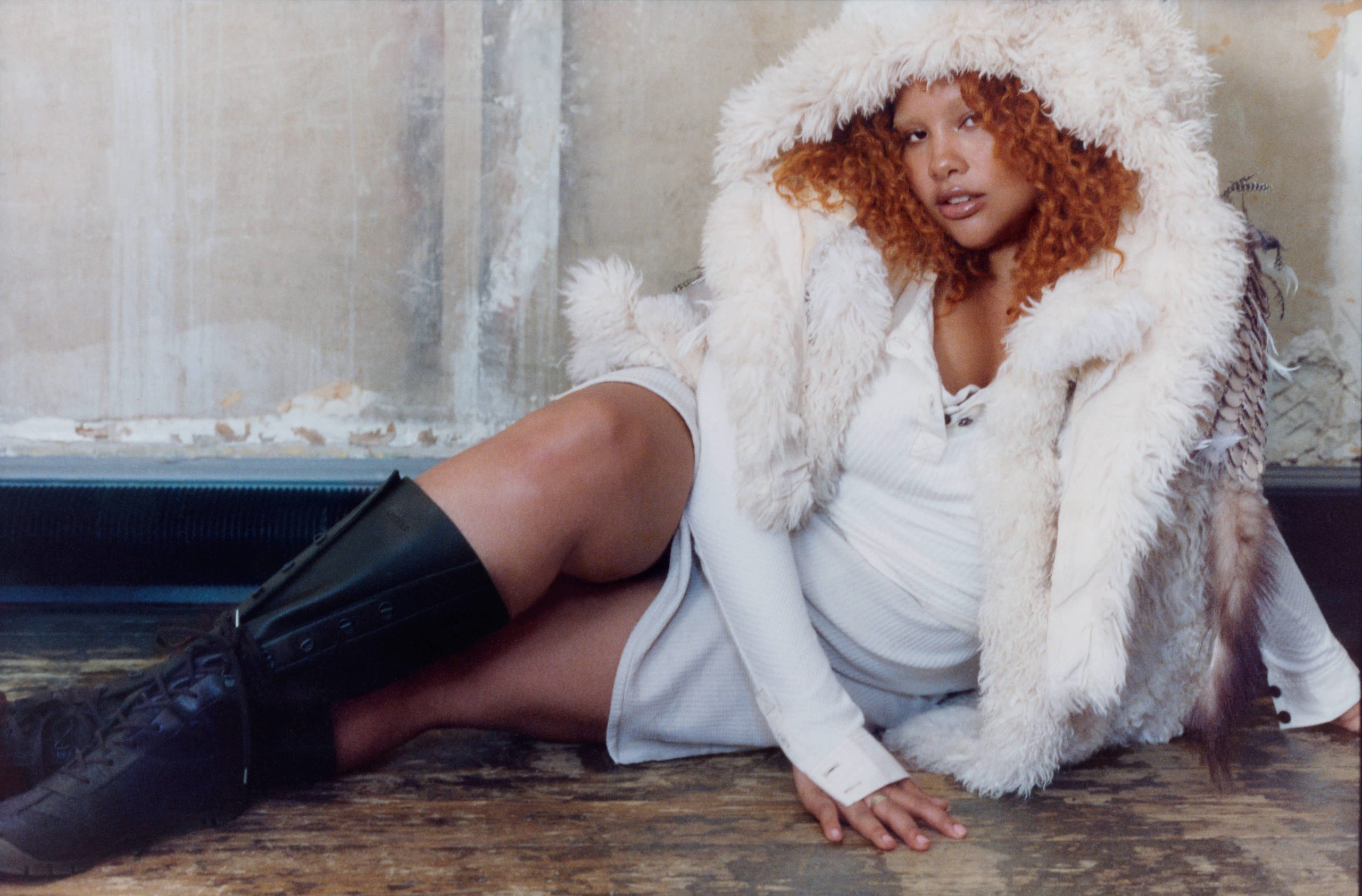
Shygirl: No. I think that’s why everything has come to a more natural style now, because it’s personal. I think that’s the same story I’m trying to tell with my body. Not wearing wigs at the moment and staying with one visual look is about creating consistency between my dialogue and me, and this implication that I am being real. You’re actually engaging with a real version of me, as real as I can be in this format.

It was something I decided very early on. Even midway through Club Shy, I kind of started to segue into this hairstyle.

I feel like beauty and whatever you do tells the story, not just to anyone looking at you, but to yourself.

For me to be able to wake up in the morning, talk about my day and then also go on stage and recognise myself and not feel like I am performing for anyone but me, feels good.

It’s given me a lot of synergy and it’s really grounding.

TUSH: And beyond the more expressive side of hair, you’ve spoken about caring for your own hair as one of your favourite personal rituals. What does taking that time for yourself give you?

Shygirl: I love it! I think it’s the same thing as what I was saying about „Mantra“ becoming physical actions.

I have days in my calendar where I can set a whole day where I’m like, okay, I’m going to go do a hair treatment, I’m going to get my roots dyed, I’m going to get my nails done.

That is more about feeling good than looking good. It’s the things I’m doing telling myself I deserve care and attention and I deserve that time.

I carve out that time in my diary. It doesn’t only mean that I’m doing things on the facade. I’m going to be spending time cooking, and I’ve made more time in that day to enrich myself by exercising.

Having that happen does affect my psyche. And being able to just go to the hairdresser and have some kind of treatment for your hair, it’s honestly the best experience! There’s nothing that makes me more pleasurable to be around than that. The thing is, if I have that, everyone’s happy because I’m happy! (laughs)
TUSH: Is it something you find particularly grounding?

Shygirl: Yeah. If I’m doing a photo shoot or whatever, I tend to work with a consistent team as much as possible because my hairstylist knows my hair.

Especially when you’re working with natural hair, you can’t just go everywhere and then expect to figure it out one day in the month. It’s about consistent care and attention and pre-empting things.

I dye my hair, there’s a lot of stress on my hair, so the haircare and the maintenance mean that I can do this long-term and not have to step away from it. (laughs) Having people who understand my skin and my hair has been really important.

It’s been such a journey with the work, and it’s something I advocate for a lot when I’m working on editorials.

I’ve seen the landscape change in my experience. Before I was making music, I was working in fashion as a booking agent, and since 2016, 2017, I’ve seen it rise and I’ve also seen it dip. There are ebbs and flows.

It takes people like me who have a position of influence to be able to push for things that potentially get forgotten or aren’t considered important in that field.

TUSH: Looking back at your own evolution, both personally and as an artist, what do you find beautiful today that you might not have appreciated a few years ago?

Shygirl: Before there was a costume almost. It’s like when you’re a teenager and you try things on, and everything feels a little bit weird, nothing feels perfect.

As I was getting used to being viewed or perceived so much, I felt like I needed to present a version of myself. And I feel way more relaxed about that as well.

There’s more synergy between the version that my family sees and my friends, and the version that everyone else sees. That just takes an inner comfortability.

I’ve learned so many things about beauty. The things that make us feel beautiful change. For me, not wearing makeup sometimes and making sure my skin feels fresh. I love the rituals of skincare, and to be able to just see myself and every imperfection. It’s not about this pursuit of making it perfect. I feel liberated when I do things like that. There’s such a communication with myself. I decide what I’m going to do with my body.

I love that everyone is free to decide what they do with their person. That’s the one true freedom that we have. To be able to express that on ourselves is fun for me, you know?! I think I have embraced that a lot more now, and that would be something I’d say comes with being of age, for sure! (laughs)

[Interview]
NOSA IMAFIDON
[Bilder]
PR
November 6, 2026
Archiv
Impressum / Imprint
Datenschutz / Privacy Policy
AGB / Terms of Use
Cookie Check